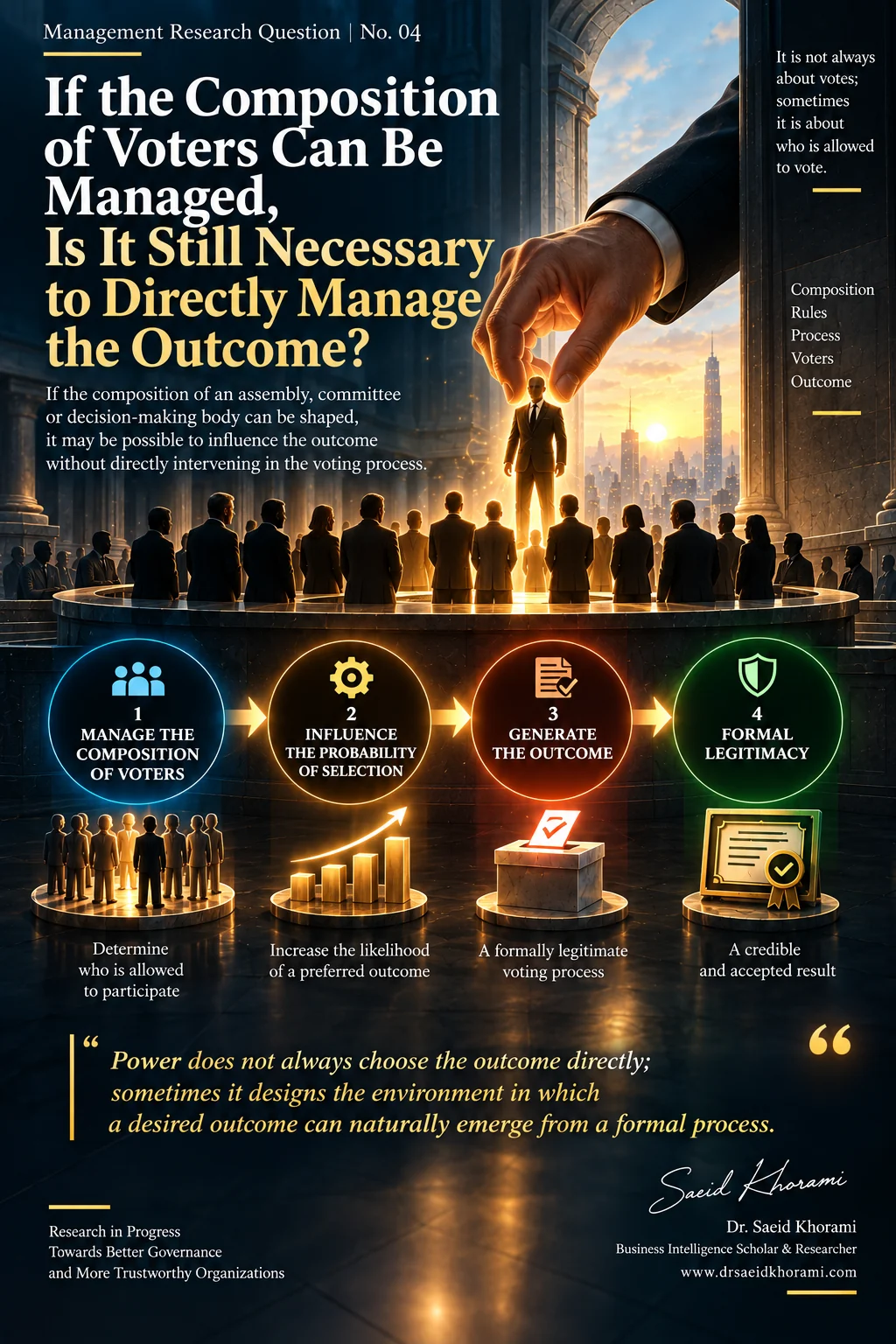
After a selection process, attention usually turns to who won, how many votes were cast, and who lost. But a more fundamental question may come earlier: who determined who was allowed to participate in the decision?
If the composition of an assembly, committee, board, or decision-making body can be shaped, influencing the outcome may not require direct intervention in the vote. The voting can be real, the count accurate, and the formal rules followed.
This creates an important distinction between managing the vote and managing the environment in which the vote is formed. The second may be less visible and more consequential.
Power does not always choose the outcome directly; sometimes it designs the environment in which a desired outcome can emerge through a formal process.
This is not merely a question about elections. It is a management question about organizations, governance, power, participation, and the architecture of decision-making.